Post 17/2024 Carbis Bay Cornwall UK. By definition geology is one of the Earth sciences that looks “at how the earth is formed, its structure and composition, and the types of processes acting on it.” Geology can also be applied to any planet or extraterrestrial body.
Take your pick of various Earth sciences: historical geology, hydrogeology (distribution and movement of groundwater), marine geology (history and structure of the ocean floor) and mineralogy (minerals and mineralized artifacts).
That’s barely a snapshot. Nevertheless, it’s a fascinating glimpse. For more than a dozen years we’ve spent parts of winter/spring in geologically rich Cornwall and Devon. For whatever reason, we’ve barely scratched the surface of geological history right here before our eyes and under our feet. It appears I’ve not paused long enough to let the rocks, waves and artifacts talk. What a pity.
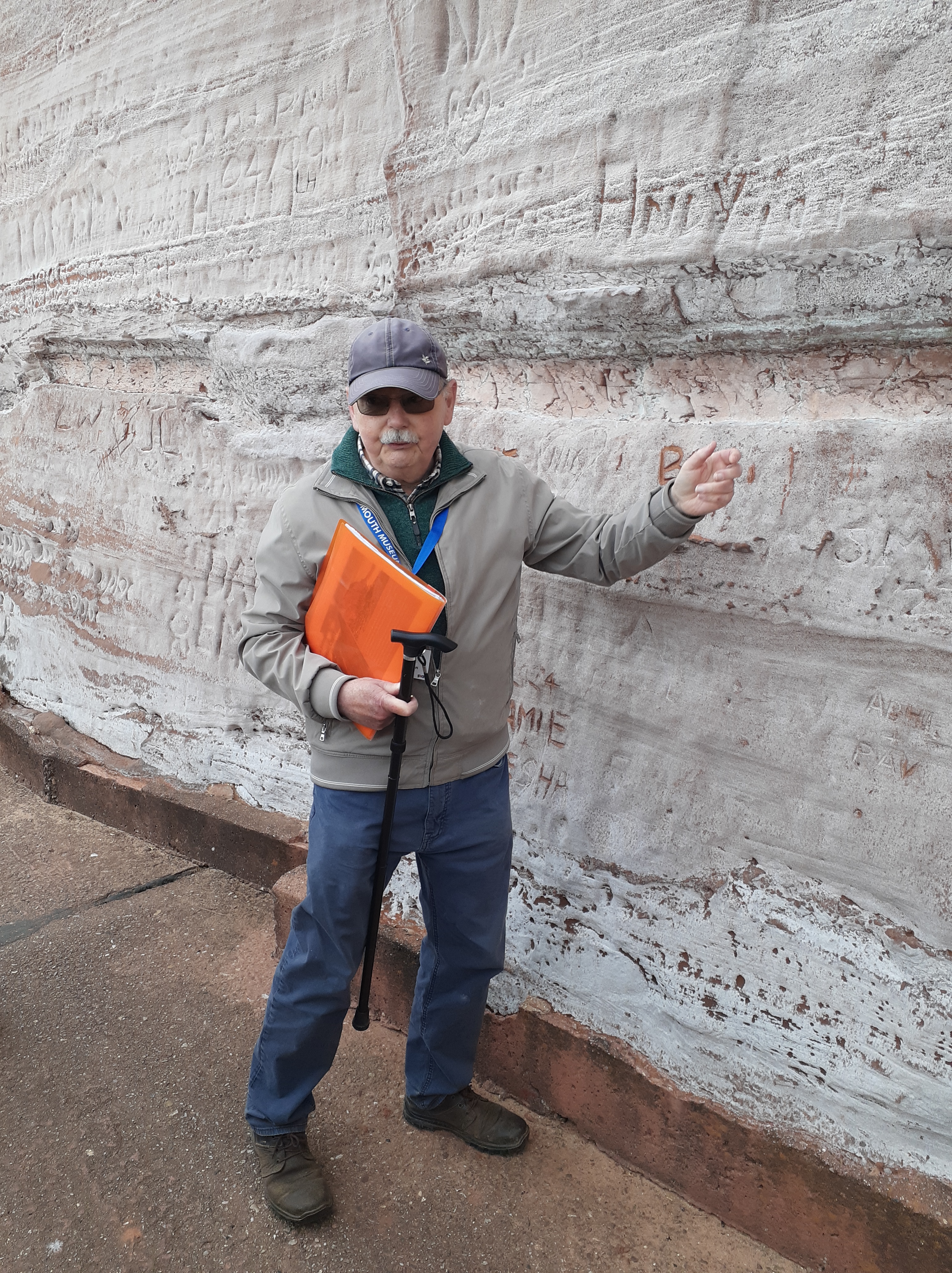
That changed during a stay in Sidmouth, Devon this week. On Wednesday we joined a Jurassic Geology walking tour on the UNESCO World Heritage Site sponsored by the Sidmouth Museum. Again I say, fascinating.


The Jurassic Coast
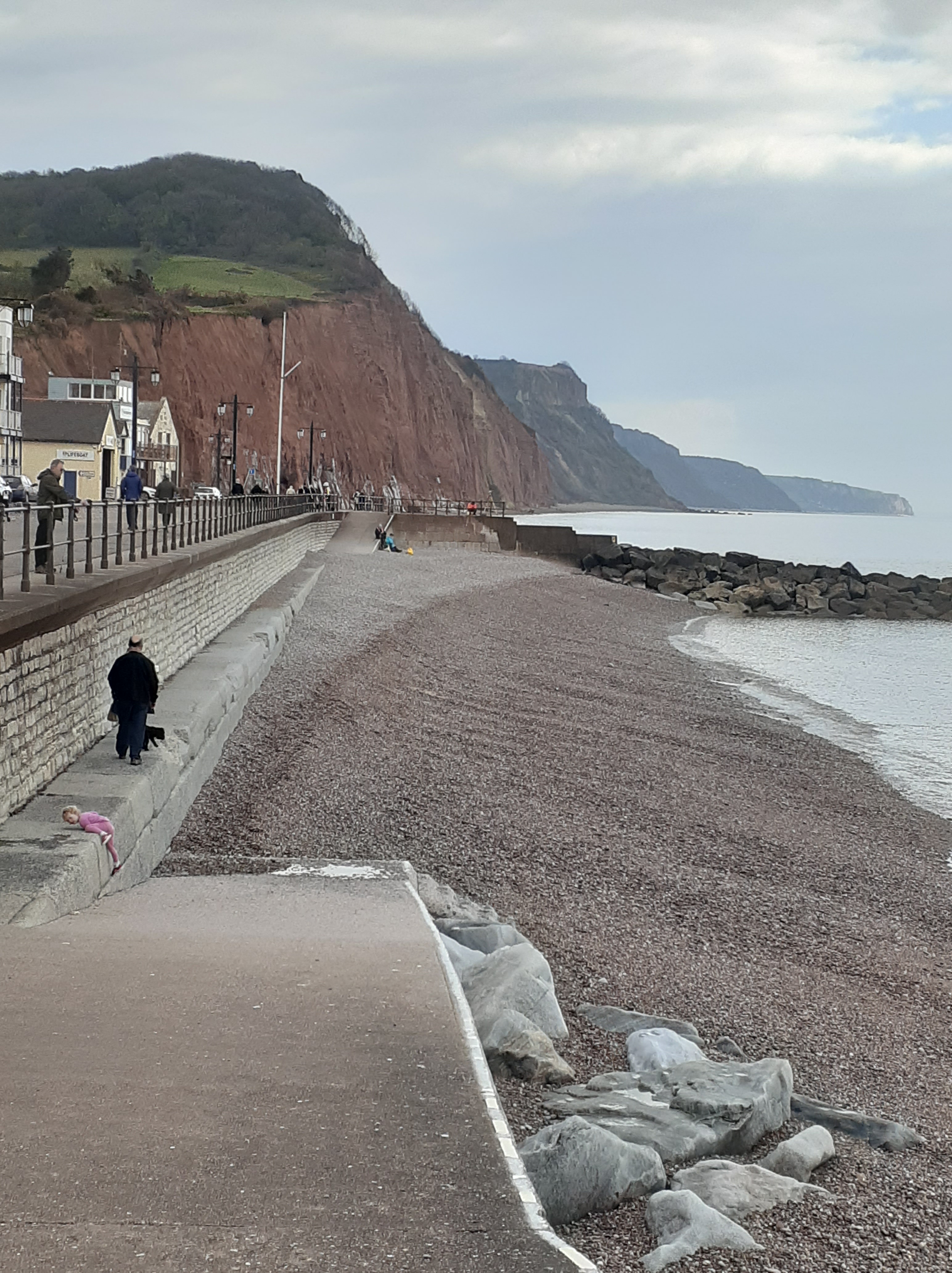
The UNESCO World Heritage Site, known informally as the Jurassic Coast, covers about 96 miles (154 km) on the English Channel from Exmouth in East Devon to Studland Bay in Dorset. of coast and beaches along the English Channel.
UNESCO says, “This coast is considered by geologists and geomorphologists to be one the most significant teaching and research sites in the world.”
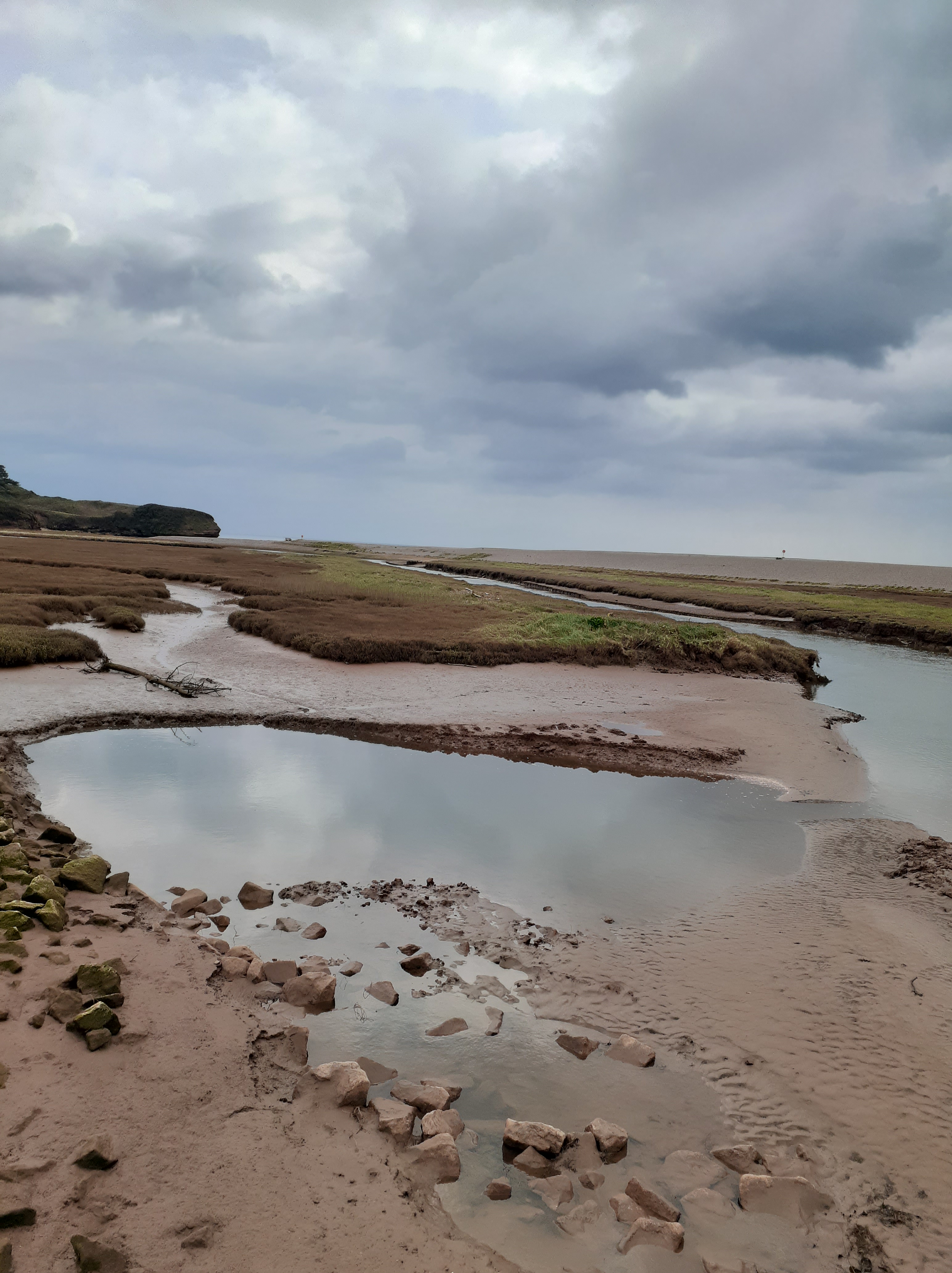
Our walking tour, led by a volunteer geologist, covered the rock formations on the east side of Sidmouth as well as the beach along the esplanade. We also walked with friend Sue from Otterton to Budleigh Salterton. Equally fascinating and memorable.



Geological history in Cornwall
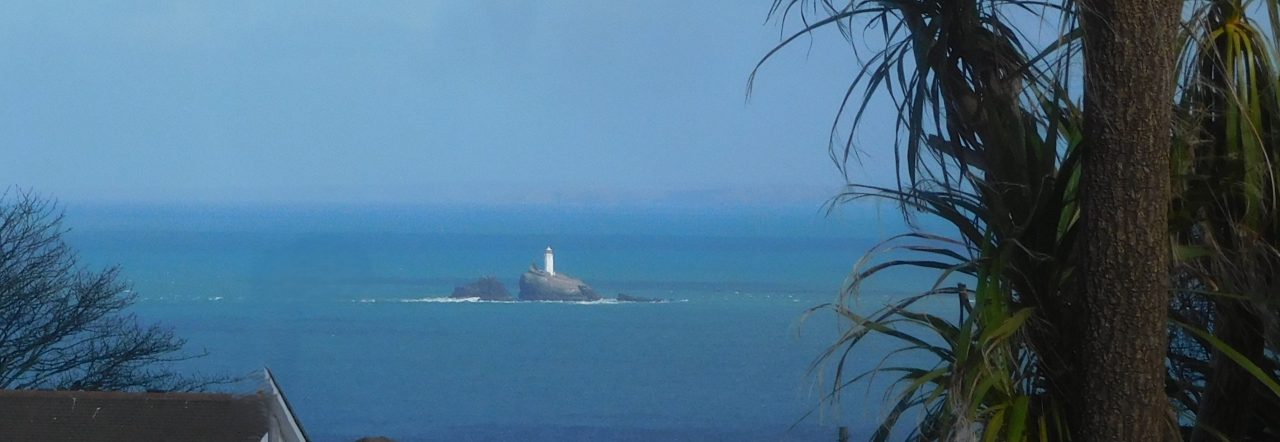
Here is a simplified geological history of the area from St Ives to Cape Cornwall, Ponderous, yes, but indicative of the mineral veins carrying tin, copper and other minerals formed as the granite was cooling 260-270 million years ago. There are walks in this area to put on the wish list.
380-360 million years ago. Mud thin layers of silt and sand settle on the Devonian sea floor. Molten rock forms either submarine lavas, or bodies of intrusive rock with the sediments,
320 million years ago. The rocks, now hardened, are squeezed and folded between colliding continents in Carboniferous times. The mudstones become slates.
290-270 million years ago. The collision generates great heat which melts the crust to form granite during the Permian period. The heat also circulates the water to produce mineral lodes.
250 million years ago. Erosion begins; and continues sporadically. Rocks which once covered the granite are gradually removed.
Four million years ago. Marine erosion gives rise to the 130 metre flat surface. Sea level falls during the Ice Age (the last one million years) and rises in recent time by about 15 metres.Credit:
Holiday Geology Guide: St Ives to Cape Cornwall by Tony Goode BSc, British Geological Survey, 1995.
Exeter Cathedral


A rhododendron and a book
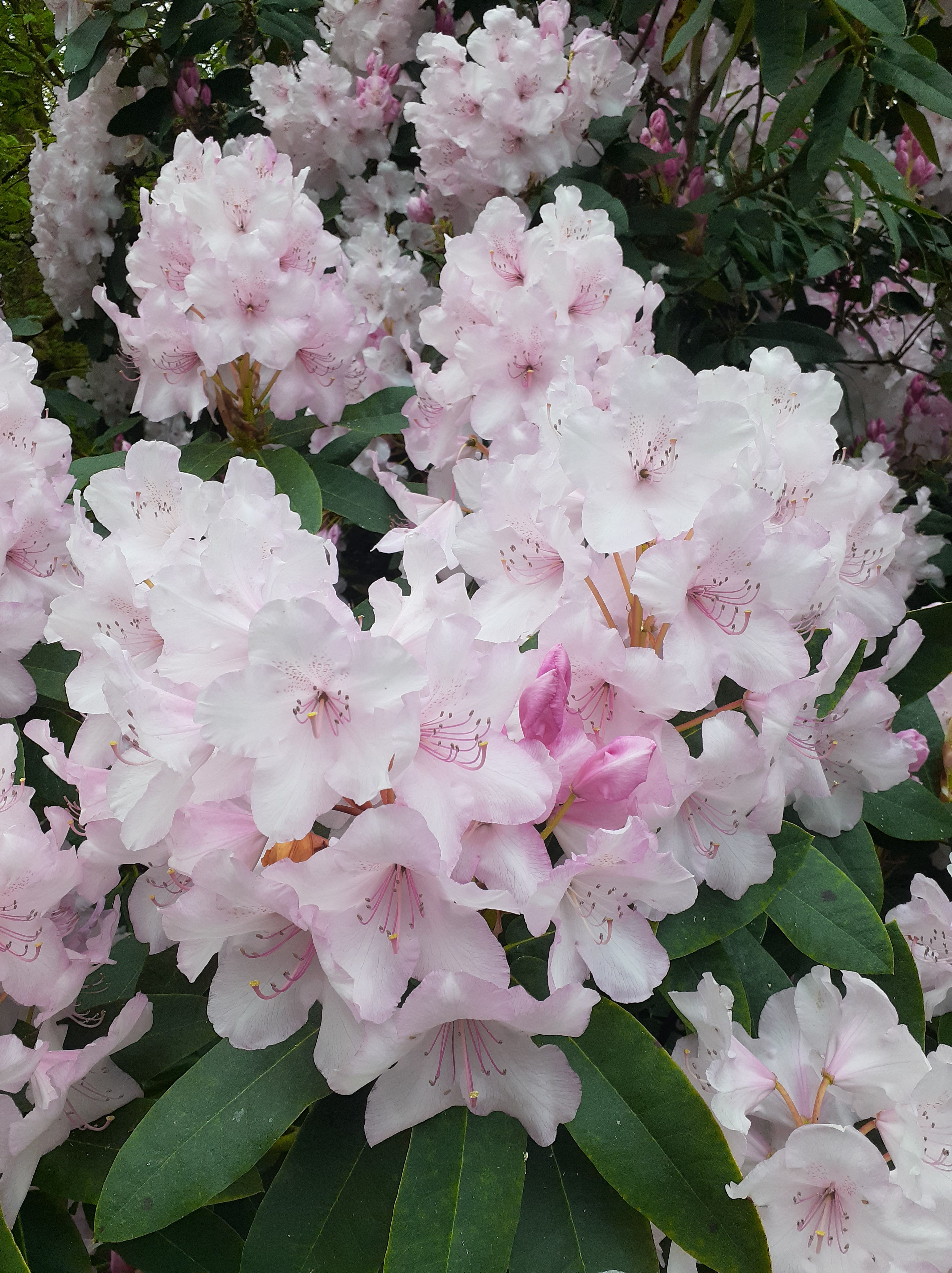

Heartwarming discoveries on foot and in a book. Same as on a geological and cathedral walk.
17th Century Nun’s Prayer
(If I've used this before, it bears repeating.)

Keep me from the fatal habit of thinking that I must say something on every subject and on every occasion.

Release me from craving to straighten out everybody's affairs. With my vast store of wisdom, it seems a pity not to use it all, but You know Lord that I want a few friends at the end.

Keep my mind free from the recital of endless details; give me wings to get to the point.

Seal my lips on my aches and pains. They are increasing, and love of rehearsing them is becoming sweeter as the years go by.

I dare not ask for grace enough to enjoy the tales of others' pains, but help me to endure them with patience.

I dare not ask for improved memory, but for a growing humility when my memory seems to clash with the memories of others.

Teach me the glorious lesson that occasionally I may be mistaken. Keep me reasonably sweet; I do not want to be a saint -- some of them are so hard to live with -- but a sour old person is one of the crowning works of the devil.

Give me the ability to see good things in unexpected places, and talents in unexpected people. And, give me O Lord, the grace to tell them so.

From a bookmark, Tim Tiley Ltd., Bristol, England.
Happy trails to you.
-John


Your sentence got cut off. Maybe about not climbing those steps. We didn’t. Went on a walkway. Had a nice lunch and walk back into town. Lots to share when we get home. Thanks for writing.
LikeLike
Hi John
<
div>I (Mary) would have had a hard time to not pick up some of those rocks th
LikeLike
Yes indeed, Mary, countless rocks with nary a one on some beaches legal to pick up. On other beaches one could freely pick up rocks and fossils. Didn’t do it. Too heavy for our suitcases. Got a few pictures instead. See you soon!
LikeLike